
From Script to Storyboard — The Pre-Production Pipeline
How a script becomes a working storyboard in UK film, TV and advertising — written by a freelance storyboard artist who's drawn the journey 500+ times.
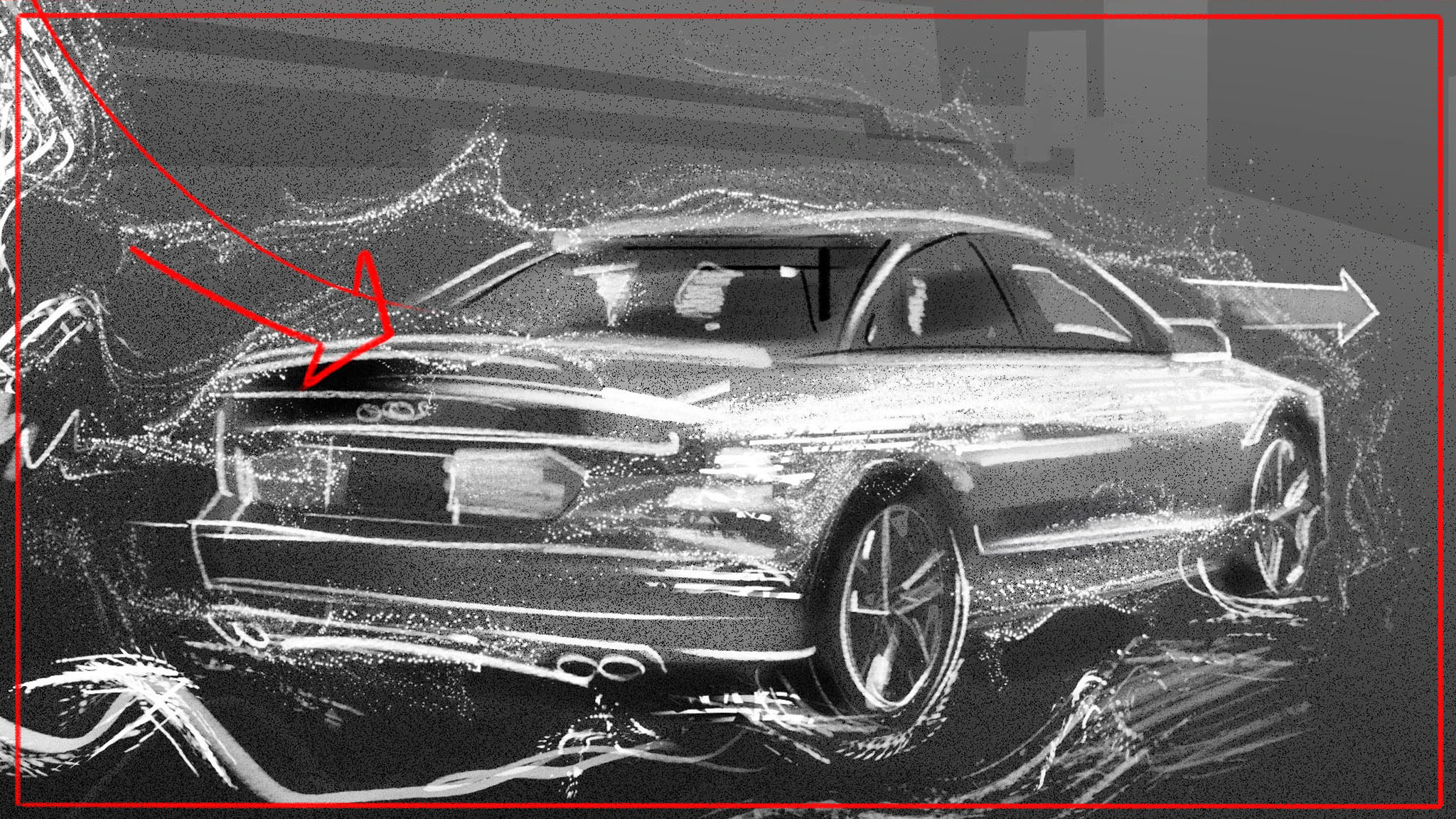
Step 1 — Reading the brief
The journey doesn't start with a pencil. It starts with a producer's email and an attachment. Before drawing a single line, a working storyboard artist reads everything: the script (or treatment), the lookbook, the previous works the director has referenced, the agency deck if it's a commercial, any location stills, character references, props.
The brief reading is forensic. You're listening for what the writer wants — and what the producer hasn't said yet. A line like "INT. CAFE — DAY" is invisible writing: it says nothing about how the scene should feel. Two characters meeting in that café could play wide and lonely, tight and intimate, or jagged and tense. This is where you start collecting questions to ask before drawing.
Step one usually ends with a short email back to the producer or director listing the questions a sensible artist needs answered first: tone of scene, reference films, lens-feel preference, and whether the director welcomes an unexpected shot suggestion or wants a faithful translation.
Step 2 — From script to shot list
The first creative decision is breaking the script into shots — the single most undervalued part of a storyboard artist's work. You're not just illustrating shots that exist on the page; you're proposing what each beat should become at the camera.
For a one-page commercial script, that might be 15-30 shots. For an action sequence in a film, it could be 60-100. The shot list is usually a numbered text document or a spreadsheet with columns: shot number, shot description, camera setup, focal length suggestion, blocking notes, dialogue/action.
This goes to the director (and sometimes DOP) before drawing begins. The faster you lock the shot list, the less waste in the drawing stages. On a tight ad schedule it might exist only verbally — proposed on a 30-minute call, then straight to drawing. On a film, a written shot list and a director review usually precede pencil.
Step 3 — Thumbnails
Thumbnails are tiny rough sketches — postage-stamp-sized — that exist purely to test composition decisions before committing time. A working artist might do six thumbnail variations of a single hero frame before picking one to develop.
Thumbnails are private work. They live in the artist's sketchbook or scratch layer. They rarely get sent to the client. The point is to fail fast, cheaply. If a composition isn't working at thumbnail size, no amount of polish at the bigger size will save it.
Some artists skip this step on simple jobs. On anything ambitious, skipping it costs you in revisions.
Step 4 — Rough frames
Rough frames are the first thing the director or agency actually sees: loose pencil-and-ink drawings sized to the deliverable (typically 16:9, 100×56mm if printed for a binder, or a digital file around 1920×1080). Loose enough to revise quickly, polished enough to read what's happening.
For UK advertising, rough frames usually go to the director first, then the agency. For UK TV, they go to the director and AD. For film, the director and DOP get first look. The artist gets notes back inside 24-48 hours — and that's when the work really begins, because notes always change the shape of subsequent frames.
The biggest mistake first-time producers make is treating rough frames as "final" and squeezing the timeline. Roughs exist precisely to be wrong; a board that arrives "done" usually means the artist guessed at the brief without enough conversation in step one.
Step 5 — Review and revisions
Two rounds is the UK industry standard, built into the quoted fee. Each round looks roughly like this:
- Notes arrive — usually as comments on a shared PDF, or annotations in a live document workflow (Frame.io, Figma, Google Drive).
- Artist clarifies — often there's a 15-minute call to make sure the notes are understood. "Make it more dynamic" is ambiguous; the artist needs to extract what dynamic means here.
- Revisions go in — frames affected by notes are redrawn or adjusted. Frames untouched by notes stay as they were.
- Re-delivery — usually inside 24-48 hours for an ad, longer for a feature.
Round two is the same dance with smaller adjustments. Beyond round two, the contract usually meters extra rounds as additional work — fair, because every additional round delays delivery.
Step 6 — Polish and delivery
Polish depends on the final use of the board. Internal director's-only boards stay rough — there's no upside to polishing a working document. Boards going to a paying client get final polish: clean lines, consistent style across all frames, any colour or tone applied, lighting suggested where it matters.
Delivery formats vary by job. The typical UK package:
- Layered PSD files — for animation pipelines and any team that needs to pull frames apart
- Flattened JPEG / PNG — for slide decks and quick distribution
- Composite PDF — with shot numbers, dialogue, and action notes; the most-requested final deliverable for agency review
- MP4 animatic — if animatic was part of the brief
Final boards usually come with a "kill date" — after which any further changes are extra work. This is the artist's protection against scope creep.
Step 7 — What happens on shoot day
Officially, the storyboard artist's work ends at final delivery. Practically, the relationship continues. Producers email asking for an extra frame because the shoot day is adding a shot. DOPs message asking which frame this insert maps to. Directors text the artist a phone-shot from the location asking if a specific composition will work.
The good storyboard artist treats this as part of the service. A 30-minute Slack response on shoot day costs nothing and earns the next job. The hostile artist (or one with three other gigs running) ignores the message — and rarely gets re-hired.
On set, the boards live in the AD's hands. They're laminated, taped to the wall in the producer's truck, or pulled up on the DOP's iPad between setups. A board that's been thoughtfully prepared in step six survives this treatment; one that hasn't gets read once and ignored.
Common pitfalls in the pipeline
- Skipping step one. Producers in a rush sometimes send a script and ask for boards by Friday. Without the briefing conversation, the artist guesses, and round-one revisions get expensive.
- Asking for "all final colour" too early. Colour at rough stage wastes hours that should have gone into composition.
- Producer-mediated feedback. If the director's notes are translated by a producer, signal is lost. Better: 15 minutes with the director directly.
- Mid-revision scope changes. "Can you add another five frames?" mid-round two doubles the time. Add them upfront or treat as a new commission.
- Confusing storyboard with concept art. Different practices, different artists. More on what a storyboard artist actually does →
If you're starting a project, the cleanest way to begin is a free estimate request — script attached, deadline noted, the brief you've already drafted. From there the pipeline above kicks off.
FAQ
How long does the full pipeline take?
Short ad: 5-10 working days end to end. TV drama episode: 10-15 days. Film sequence: 3-6 weeks. Rush shorter, of course.
Can I see the thumbnails?
Usually not — they're the artist's working scratchpad and would slow review without adding signal. If you really want to, ask.
What software is typically used?
Procreate, Photoshop, occasionally Storyboarder. Pencil and paper still earns its place at the rough stage for many UK artists.
Do I need a shot list before reaching out?
No. The artist will help build it as part of the work. Just send the script.
Can I get a faster turnaround?
Yes — most artists offer rush schedules with a 30-50% surcharge. Same-day starts are routine.
Related cornerstone posts
Storyboard Formats Explained — Thumbnail, Rough, Clean, Shooting Board
Thumbnail, rough, clean, shooting board, animatic — the practical differences between the four main storyboard formats used in UK production…
Film vs TV vs Advertising Storyboards: What Actually Changes Between the Three
Storyboards aren't one job. Film, TV and advertising each have distinct rhythms, deliverables and review cycles. A UK storyboard artist's ho…
AI Storyboards vs Human Storyboard Artists — An Honest 2026 Comparison
An honest 2026 comparison from a UK storyboard artist who licensed his work to power StoryboardCanvas AI. When AI wins, when humans win, and…
Written by Mitch — UK freelance storyboard artist with 20+ years in film, TV and advertising. Get a free estimate · Browse portfolio · All posts