
Film vs TV vs Advertising Storyboards — What Actually Changes
Storyboards aren't one job. Film, TV and advertising each have distinct rhythms, deliverables and review cycles. A UK storyboard artist's honest breakdown.
Why the distinction matters
"Storyboard artist" is one job title covering three quite different practices. The skills overlap — drawing, shot literacy, sequence thinking — but the rhythm, deliverables and review cycles differ enough that booking a great film storyboard artist for a six-week advertising sprint can frustrate both sides. Producers who understand the distinction brief better, get better boards, and save real money. Here's the honest breakdown.
Film storyboards — long arc, deep prep
Film storyboards live inside a longer pre-production window. You rarely board a live-action feature from page one to closing credits — that's an animation thing. Instead you focus on the difficult sequences: action set pieces, VFX-heavy scenes, complex stunts, anything where the camera does something specific or the geography must read clearly before the unit reaches location.
The relationship is usually with the director directly, sometimes with the DOP alongside. Notes are detailed and creative; revisions cycle slowly because the director is also wrangling cast, locations and budget. A feature sequence might board over two to six weeks with multiple deep revision rounds.
The output goes everywhere on set: the assistant director plans the day from it, the DOP pre-lights from it, and stunt and VFX teams use it for safety and shot planning. Final boards must read at speed in the chaos of shoot day — so shadow, blocking, focal length and lens movement are all marked.
Film storyboarding rewards artists who can sustain a single visual language across hundreds of frames, who think geometrically (where is everyone in the room? where is the camera?), and who know enough cinematography to suggest a shot rather than just illustrate one. More on film storyboard services →
TV storyboards — speed, volume, format discipline
UK television runs on a calendar that would terrify a film producer. A drama episode might board over a couple of weeks, but the unit shoots the previous episode while the next is prepped, so the artist must deliver clean, usable boards on a tight, predictable rhythm. Series TV is a marathon at sprint pace.
Volume changes the work. You're producing more frames, simpler in execution per frame, but with more variety: comedy multi-cam blocking on one job, an action sequence on the next, a docu-drama reconstruction the week after. Style consistency across an episodic series matters because the same boards feed multiple directors block-shooting.
The deliverables are more rigid. BBC, Channel 4 and ITV all have format conventions and compliance frameworks that boards have to slot into. A short film storyboard artist who has never worked TV will produce beautiful frames that don't quite work for the workflow; an experienced TV boarder produces frames that disappear into the pipeline.
The collaboration is broader too: producers, assistant directors, line producers, post-production supervisors and writers all touch the boards. Two revision rounds is the minimum; three or four is normal. The board becomes a working record of who decided what, when. More on TV storyboard services →
Advertising storyboards — client politics, pitch decks
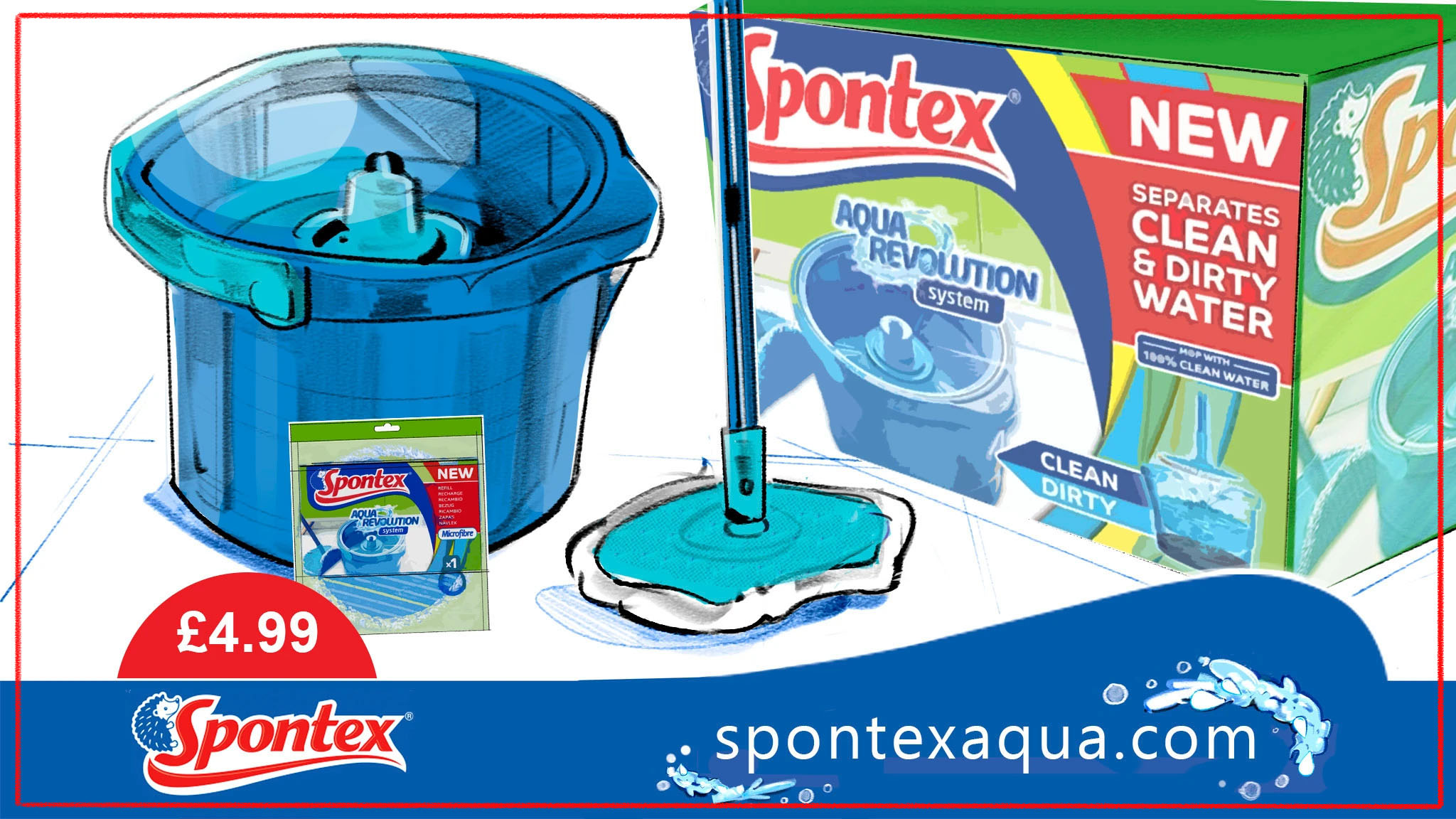
Advertising is its own animal. The job is rarely "what does the camera do" — it's "can we get the client to sign off?" Advertising storyboards serve a triple audience: the director needs a shot plan, the agency creatives need to defend their concept internally, and the client needs to feel comfortable spending six or seven figures on the production.
That last audience changes everything. Frames have to be polished. Colour is more common than in film or TV — clients respond to colour because it looks closer to "the finished thing." Lighting suggestion matters. Brand recognition matters: if the product is in shot, it has to look like the product, not a generic stand-in.
The cycle is short and political. A 30-second TV ad might board in three to ten days, reviewed by the agency, the production company, then the client — three sets of notes from three mindsets. The storyboard artist absorbs contradictory feedback and produces something that satisfies all three. Two rounds is the contractual norm, but in practice you'll often do more, with the agency politely managing what gets passed back.
Pricing in advertising is usually higher per frame because of the polish required and the speed. More on advertising storyboard services →
The three on one table
Here's the same project type laid out side by side, drawing on twenty years of working invoices and conversations with peer artists:
| Aspect | Film | TV | Advertising |
|---|---|---|---|
| Typical timeline | 2-6 weeks | 5-15 working days | 3-10 working days |
| Frame count | 30-200+ per sequence | 40-150 per episode block | 15-50 per spot |
| Style | Tonal or B&W; sometimes colour for pitches | B&W or quick tonal | Tonal or colour |
| Primary audience | Director, DOP, ADs | Producers, directors, ADs | Agency, client, director |
| Polish required | Medium-high | Medium | High |
| Typical rate | £55-£200 per frame | £40-£120 per frame | £80-£250 per frame |
Ranges from my own invoiced work plus peer polling between January and April 2026 — see the UK storyboarding statistics page for the full citable dataset.
When the jobs blur
The neat columns above blur often. Branded content sits between TV and advertising. A music video set piece feels like a film sequence dropped into a three-minute window. A high-end Netflix documentary shoots like a feature but on a TV schedule. A premium car commercial is essentially a five-day film shoot pretending to be advertising.
The most useful generalisation is this: look at who's signing off. If the director has final word and the budget is large enough to absorb a real pre-production phase, work like a film. If a schedule with locked weekly delivery dates is the boss, work like TV. If the boards exist to win a client, work like advertising. The skills are the same; the rhythms aren't.
What this means for hiring
When you're hiring a storyboard artist, the most useful thing you can do in your first email is name the format. "Storyboards for a 30-second TV ad" gets a different quote and a different artist short-list than "storyboards for a TV drama action sequence." Sample work that covers your specific format matters — a portfolio dominated by polished colour ad frames doesn't necessarily prove someone can keep up with episodic TV.
For UK productions, you'll usually find that artists who've worked deeply in one of these three lanes can adapt to the other two — but only if they want to. Some artists prefer the long arc of film. Some thrive on the variety of TV. Some love the speed and politics of advertising. Ask in the first call which lane the artist actually enjoys; that usually predicts how they'll handle yours.
If you're not sure where your project sits, send the script and a rough deadline to a free estimate request and I'll come back with the right approach for whichever lane the project is closest to.
FAQ
Is a film storyboard artist more expensive than an advertising one?
Per-day, no — sometimes the reverse. Advertising frames are typically higher per-frame because of the polish demands, but film projects often consume more days. Final invoice depends on frame count and style, not job category.
Can the same artist board a feature one month and a TV ad the next?
Yes — most working UK storyboard artists do. The hard part isn't drawing differently, it's switching review cadences cleanly. Good artists can; great artists can without complaining.
Do TV storyboards always need colour?
No. Most UK TV drama runs on tonal black-and-white boards. Colour is rare in TV outside specific style references or VFX-heavy episodes.
Can I share a film storyboard with the client like an ad board?
Possibly — depends on the audience. Film boards are often "messier" intentionally; if your client expects ad-board polish they may need a tidied-up version for the final review.
How many revisions are normal for each?
Film: 2-4 deep rounds. TV: 2-3 fast rounds per block. Advertising: 2 contractual rounds plus political back-and-forth between client / agency.
Related cornerstone posts
Storyboard Formats Explained — Thumbnail, Rough, Clean, Shooting Board
Thumbnail, rough, clean, shooting board, animatic — the practical differences between the four main storyboard formats used in UK production…
From Script to Storyboard: The UK Pre-Production Pipeline Explained
How a script becomes a working storyboard in UK film, TV and advertising — written by a freelance storyboard artist who's drawn the journey …
What Producers Actually Look For in a Storyboard Artist's Portfolio
From the hiring side — what UK producers, ADs and agency creative directors actually look for when choosing a freelance storyboard artist.
Written by Mitch — UK freelance storyboard artist with 20+ years in film, TV and advertising. Get a free estimate · Browse portfolio · All posts