
Storyboard Formats Explained
Thumbnail, rough, clean, shooting board, animatic — the practical differences between the four main storyboard formats used in UK production.
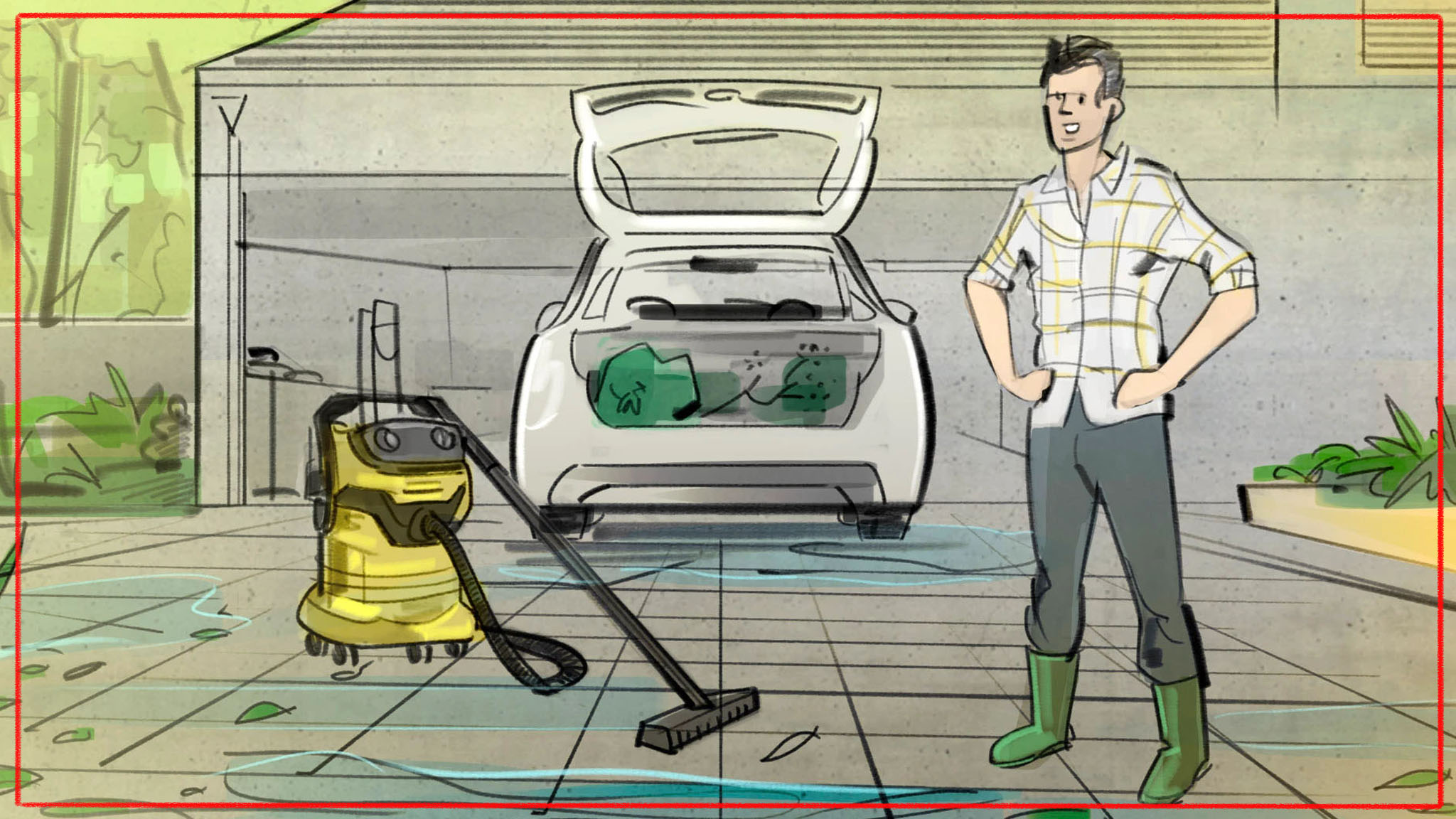
The four core storyboard formats
Storyboards aren't one thing. UK storyboard artists move between four formats depending on the pre-production stage, who's reviewing the boards, and the budget in the room. Knowing the difference saves money — clients often pay for "clean" when "rough" would have done the job.
1. Thumbnail storyboards
Thumbnails are the smallest, fastest, cheapest format — postage-stamp sketches, two-to-eight per page, used to test composition before anything is committed. They're usually private working drawings: the artist's scratchpad, rarely shown to clients.
When used: Earliest pre-production phase. Director and artist exploring whether a sequence works.
Polish level: Minimal. Often a few lines per frame. Stick-figure characters acceptable.
Frame count: A full sequence might thumbnail at 50-100 frames in an hour.
Cost: Usually folded into the bigger commission as preparatory work. Some artists offer "thumbnail only" at a low rate (~£15-£25 per frame in the UK) for projects that genuinely just need them.
2. Rough storyboards
Roughs are the most common deliverable in UK pre-production. Pencil-and-ink (or digital) frames sized to the deliverable — usually 16:9 at around 1920×1080 digitally, or sized for a printed A4/A3 board. Legible, correctly blocked, characters drawn enough to identify — but not "finished."
When used: First version sent to director / agency for review. Most TV drama boards stay in this format. Most film pre-vis lives here.
Polish level: Medium-low. Lines confident; tonal shading optional.
Frame count: A 30-second commercial might rough at 15-30 frames.
Cost: £25-£60 per frame in the UK, depending on detail. Full pricing guide here →
3. Clean storyboards
Clean boards are tightened roughs: lines re-drawn cleanly, tonal shading applied, sometimes colour added. The frames look like they belong in a presentation deck rather than a working sketchbook.
When used: Client-facing reviews in advertising. Pitch decks. Anything heading to a paying client who hasn't been part of the creative conversation.
Polish level: High. Each frame would stand alone as a printable image.
Frame count: Same as the rough — typically a clean is a polished version of an existing rough.
Cost: Tonal £55-£120 per frame; full colour £100-£250.
4. Shooting boards
Shooting boards are the format that goes to set. They're not necessarily more polished than rough or clean boards — either can become one — but they carry extra information: shot numbers, focal length notes, camera moves, action descriptions, dialogue lines, and sometimes lens-specific lighting.
A shooting board is the most useful document a storyboard artist creates. The AD references it on shoot day, the DOP plans lighting from it, and the producer uses it to track what's been shot.
When used: Final delivery for production. The board that survives shoot day.
Polish level: Same as the rough or clean it's built on, plus annotations.
Cost: Usually included in the per-frame rate when the artist knows it's heading to set. Some artists charge a small uplift for the annotation overhead.
Animatic — the fifth format
An animatic isn't a storyboard format as such — it's storyboards with time added. The static frames are sequenced into a video file, timed against the script (or scratch VO), with simple in-frame motion (push-ins, pans), music or sound effects.
Animatics are particularly useful for: comedy (timing is half the joke), music videos (sync to track), VFX-heavy spots (testing transitions), pitch decks (clients respond to motion), and focus-group testing.
UK animatic pricing in 2026 typically lands at £35-£90 per finished second on top of the underlying board cost. More on animatic services →
Which format do you actually need?
Most UK producers default-spec clean colour boards. In maybe 30% of cases that's right. In the other 70%, the production would be better served by rough boards plus, if needed, a few hero clean frames for the pitch deck. A working rule of thumb:
| Project type | Format usually right |
|---|---|
| Director's pre-vis only | Rough |
| TV drama episode | Rough → shooting |
| TV commercial — internal | Rough |
| TV commercial — client review | Tonal clean |
| Premium ad pitch deck | Colour clean |
| Music video | Rough + animatic |
| Feature action sequence | Rough → shooting |
| Animation pre-production | Clean (layered) |
If you're unsure for your specific project, send the brief and I'll recommend the format that does the job for the lowest cost.
FAQ
Can I upgrade rough boards to clean boards later?
Yes — usually cheaper as a single workflow than commissioning each separately. Most artists offer "roughs first, clean later" as a single commission.
Do clean boards need to be in colour?
No. Tonal clean (greyscale with shading) is often what clients actually need; colour adds cost without adding clarity for many uses.
Are shooting boards the same as continuity boards?
Continuity boards (or continuity sheets) are a different document — they track wardrobe, props, blocking for continuity across the shoot. Some artists do both; the formats serve different teams.
What format is best for an investor pitch?
Tonal or colour clean. The aim is to communicate vision, not the technical shot list.
Can I print storyboards small for a binder?
Of course — 16:9 frames usually print well at four-to-a-page on A4 landscape.
Related cornerstone posts
From Script to Storyboard: The UK Pre-Production Pipeline Explained
How a script becomes a working storyboard in UK film, TV and advertising — written by a freelance storyboard artist who's drawn the journey …
Storyboard Symbols and Visual Language — The Producer's Cheat Sheet
The arrows, labels and shorthand symbols every storyboard uses — explained for producers, directors and agency creatives. Bookmark this.
Film vs TV vs Advertising Storyboards: What Actually Changes Between the Three
Storyboards aren't one job. Film, TV and advertising each have distinct rhythms, deliverables and review cycles. A UK storyboard artist's ho…
Written by Mitch — UK freelance storyboard artist with 20+ years in film, TV and advertising. Get a free estimate · Browse portfolio · All posts