
AI Storyboards vs Human Storyboard Artists
An honest 2026 comparison from a UK storyboard artist who licensed his work to power StoryboardCanvas AI. When AI wins, when humans win, and how the hybrid workflow works.
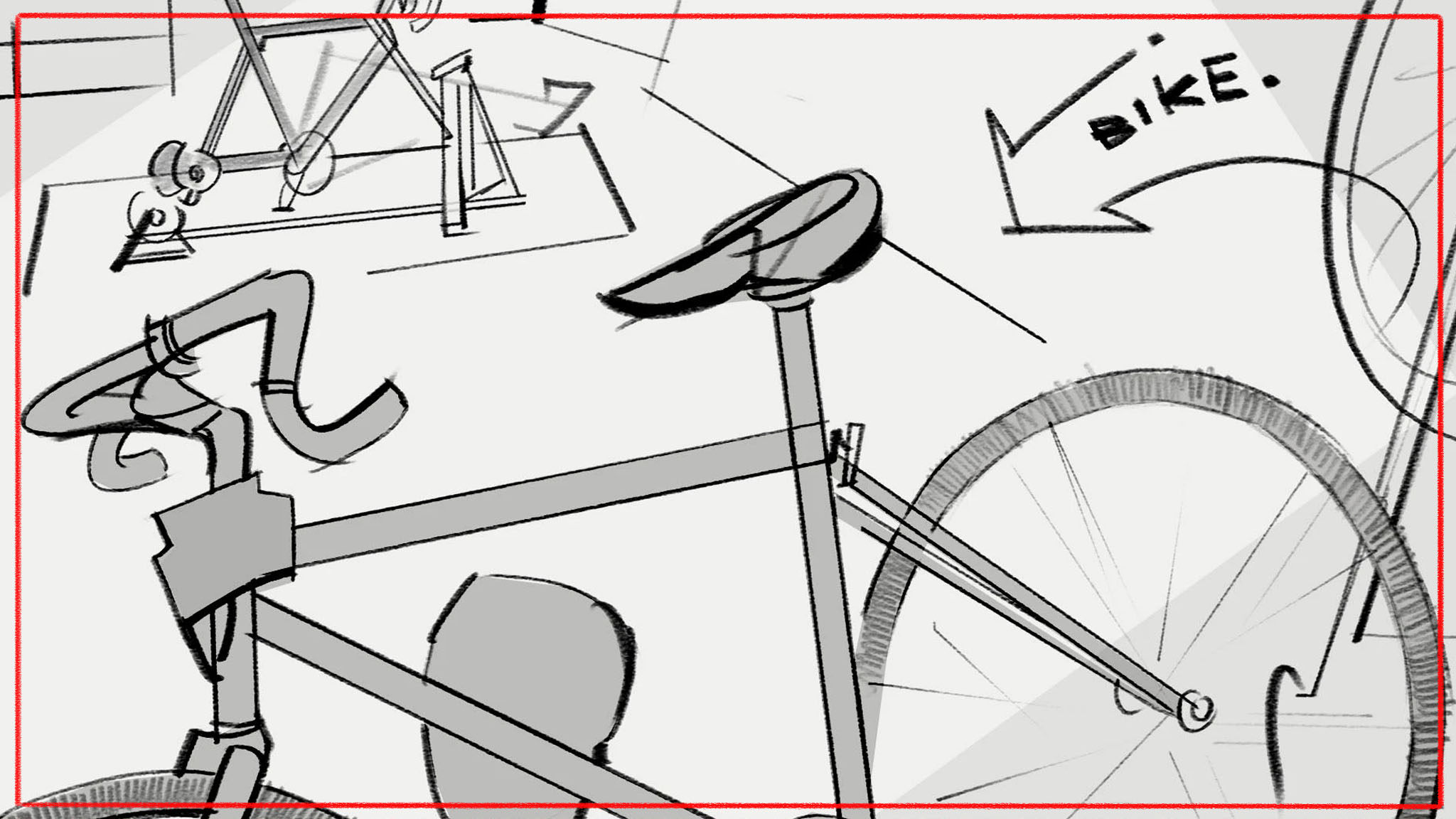
Disclosure: I'm the signature artist for StoryboardCanvas AI's default visual style — they licensed roughly 2,000 frames of my work as their training set. So I have skin in this game in both directions. This post is written to be honest about both, not to sell either.
The honest version up front
In 2026, AI storyboard generation is genuinely useful for the volume-heavy, exploratory stages of pre-production — but not yet as a finished deliverable for paying clients. The most efficient productions I know use AI for rough exploration and humans for final boards. Anyone claiming it's all one way is either selling a tool or defending a livelihood; discount both.
Where AI genuinely wins
Four things AI storyboard generators do well in 2026:
1. Volume in a hurry
Need 50 rough frames overnight to test multiple visual directions? AI is faster than any human alive. Not all will be usable, but a 30% hit rate at 50× speed beats a human producing 100% usable frames at 1× speed — when the goal is exploration.
2. Pitch decks and treatments
Decks that sell a concept to a brand client benefit from AI-generated frames: the cost-per-image is low and the polish is high enough for a slide. You're not asking these frames to survive shoot day — only to win the pitch. Deck frames don't need to be production-grade.
3. Multiple variants of the same beat
Want to see the same scene shot wide, mid, close, low-angle and overhead? Ask the AI for all five. A human storyboard artist will do one well and the others passably; the AI gives all five at the same medium quality. For exploration, that breadth is more valuable than depth.
4. Late-night iteration
The director's awake at 1am with a new idea. They can prototype it in the AI tool without waking the storyboard artist. By morning they have something concrete to ask for, instead of vague notes.
Where humans still win — by a lot
Five places where AI consistently falls short, even in 2026:
1. Continuity across a sequence
AI generators struggle to keep the same character, location and blocking consistent across 30 frames in a row. Each frame is generated in isolation, so small drift accumulates. A human artist holds the whole sequence in their head, drawing frame 15 knowing what frame 14 just did and what frame 16 is about to do.
2. Specific character likeness
If the brief requires a real actor's face — the named celebrity in the ad, the cast member in the TV drama — AI frames either approximate poorly or generate generic faces that read as "AI art." A human can draw the face you actually need to see.
3. Custom cinematography choices
"Shot on a 35mm at f/2.8, dolly-in over four seconds with the foreground passing left to right" is a sentence a human storyboard artist understands and translates. AI tools accept the words but the frame doesn't reflect the camera language reliably. Cinematography is a conversation between artist and DOP, not a prompt.
4. Subtext and intent
A scene's emotional charge — what's not said, what's just under the surface — gets baked into a human storyboard frame by choices about angle, focal length, what's in shadow, what's in focus. AI tools optimise for surface accuracy and miss the deeper intent. This matters most in drama, comedy, and any scene whose value isn't visible to a literal reader.
5. The kill-fee conversation
A human storyboard artist has an opinion about whether a director's note is a good idea. They'll push back when something won't work, propose alternatives, and contribute creatively to the project. The AI never pushes back. For a senior creative collaborator, that absence of feedback is a real loss.
The licensing angle — why this matters
Most AI image generators were trained on scraped image data of uncertain provenance, and the legal status is contested. For productions that need clean IP — anyone serious about commercial exploitation, broadcast or distribution — that uncertainty is a real cost.
StoryboardCanvas AI took a different approach, licensing a specific working artist's catalogue (mine) to train their default visual style. The output reads as professional storyboards because it was trained on professional storyboards. The IP is clean, so productions can use it with confidence about provenance.
It's also why the output reads as hand-drawn rather than generic AI imagery. The frames have weight, perspective decisions, blocking. They were trained to be a storyboard, not a poster.
Try StoryboardCanvas AI with 20% off using code SBA20 →
The hybrid workflow — what productions are actually doing
The most efficient setup I see in 2026 is a three-stage hybrid:
- Stage 1 — AI exploration. The director or agency creates 30-50 AI frames overnight, testing multiple visual directions. Cost: hours, not days. Output: a rough sense of what works.
- Stage 2 — Human selection. The director picks the 12-15 frames that genuinely earn their place. Some are AI-as-is; some are AI-rough that need re-drawing; some are still open and need a human to invent from scratch.
- Stage 3 — Human polish. A human storyboard artist takes the selected frames, redraws them properly, and produces the final shot-by-shot board the production will actually use.
This is faster than an all-human build (exploration is compressed) and cleaner than AI-only finals (production reads better when human hands close the work). It also costs less than the all-human version for projects with broad exploration phases.
Cost comparison (UK 2026)
| Approach | 30-second ad (20 frames) | Pros | Cons |
|---|---|---|---|
| All AI | ~£40-£100 subscription | Cheap, fast, infinite variants | Won't survive shoot day without rework |
| All human | £1,500-£6,000 | Production-grade, IP-clean | Slower exploration phase |
| Hybrid | £800-£3,500 | Best of both | Requires coordination |
See the full UK pricing guide for context on the human side.
What to choose for your project
- Personal project, student film, internal exploration: AI is fine. The frames don't need to survive professional scrutiny.
- Pitch deck to win a client: AI works if the frames are good enough. Hybrid is safer.
- Commercial production heading to broadcast: Hybrid or all-human. AI alone risks IP and quality issues.
- Premium brand work, network drama, feature film: All-human, with optional AI for early exploration.
If you'd like a real recommendation for your specific project, send the brief and I'll come back with the most efficient combination.
FAQ
Will AI replace human storyboard artists?
Not in the form they currently take. AI will replace lazy human storyboard artists. Professional storyboard artists who use AI as part of their toolkit will thrive.
Is it ethical to use AI storyboards on a paid client project?
Depends on the tool and on what you tell the client. Tools trained on properly licensed material (like StoryboardCanvas AI) sidestep most ethical concerns. Tools trained on scraped data are more contested. Disclose to clients when relevant.
Can AI handle revisions?
Sometimes — but the revisions often introduce inconsistency with earlier frames. A human is usually faster at clean revisions inside a polished sequence.
Do agencies care if frames are AI-generated?
Some do, some don't. Major brands typically want hand-drawn or hybrid for final boards. Internal agency work is more permissive.
Can AI tools produce animatics?
Increasingly yes, but the timing and intent often need human polish. Animatic services here →
Related cornerstone posts
Storyboard Formats Explained — Thumbnail, Rough, Clean, Shooting Board
Thumbnail, rough, clean, shooting board, animatic — the practical differences between the four main storyboard formats used in UK production…
Film vs TV vs Advertising Storyboards: What Actually Changes Between the Three
Storyboards aren't one job. Film, TV and advertising each have distinct rhythms, deliverables and review cycles. A UK storyboard artist's ho…
20 Years as a UK Freelance Storyboard Artist — What I'd Tell My Younger Self
Twenty years of UK freelance storyboarding for Netflix, Google, Nike and Dyson — the practical lessons I'd give my younger self if I were st…
Written by Mitch — UK freelance storyboard artist with 20+ years in film, TV and advertising. Get a free estimate · Browse portfolio · All posts